Multiple clients, recurring work and limited visibility.
The team handled recurring assignments alongside new client work. I reviewed the client rota, gave recurring assignments dedicated slots, opened capacity for incoming work and tracked delivery first in Google Sheets, then later in Trello.
The goal was simple: make workload, ownership and status easier to see so fewer things were missed.
The system also had to support the writers.
- Assigned work and balanced workload across the team.
- Interviewed writers and created practical hiring assessments.
- Built onboarding documentation to explain how the team worked.
- Edited work and coached writers through recurring quality issues.
- Gave feedback and warnings over time when performance dropped.
- Recommended termination to senior management when improvement did not happen.
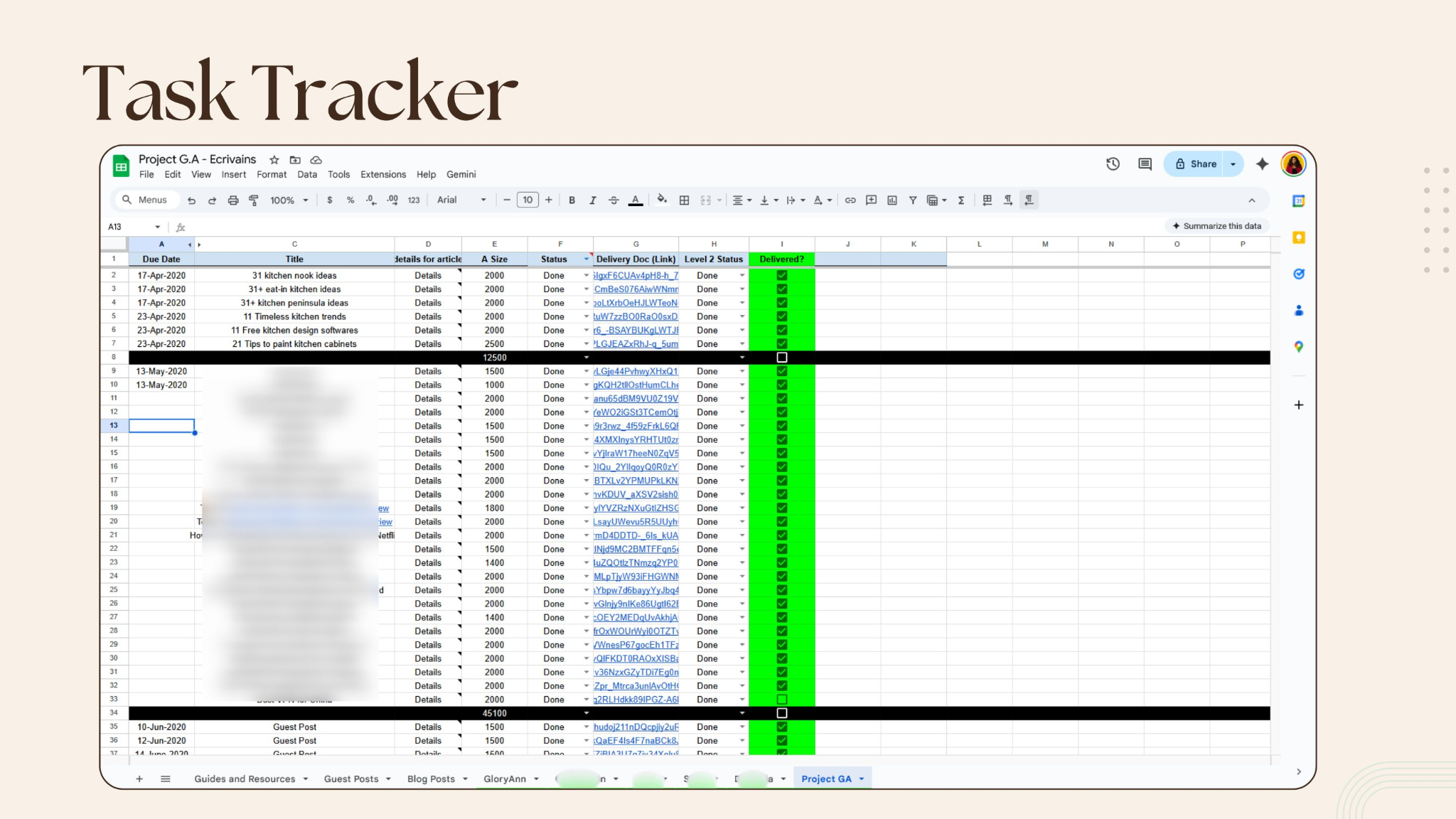
A visible production tracker.
The original tracker captured due dates, article titles, word counts, status, delivery links, second-level review and delivery completion.
The process lived in documents too.
I created or maintained supporting resources so expectations were not trapped in verbal instructions.
Writer onboarding guide
How tasks were assigned, submitted and checked before editorial review.
View excerpts ↗ HiringWriter assessment
Practical tasks for evaluating writing range and instruction-following.
View excerpts ↗ BriefingArticle brief
Audience, purpose, structure and commercial intent translated for writers.
View excerpts ↗ StandardsFormatting guide
Editorial rules for document consistency, headings and keyword use.
View excerpts ↗More visibility, fewer avoidable problems.
The clearer system improved consistency, reduced missed deadlines, sped up communication and made capacity easier to see. Onboarding became quicker because new writers had a reference document instead of relying only on repeated explanations, and client complaints reduced as the workflow became more predictable.